This study investigates the airflow distribution and thermal behavior within a wafer burn-in test system using CFD analysis. The results provide guidance for improving temperature uniformity and system reliability
As electronic systems continue to demand higher performance within increasingly compact enclosures, thermal management challenges become more complex. CFD-based forced convection analysis provides a powerful approach for evaluating airflow behavior, identifying thermal hotspots, and optimizing cooling system designs to achieve reliable operation and long-term product durability.
Airflow distribution and thermal uniformity within process chambers play a crucial role in semiconductor wafer manufacturing. CFD analysis enables engineers to evaluate flow behavior, predict wafer temperature distribution, and optimize chamber designs to improve process stability, product quality, and production yield.
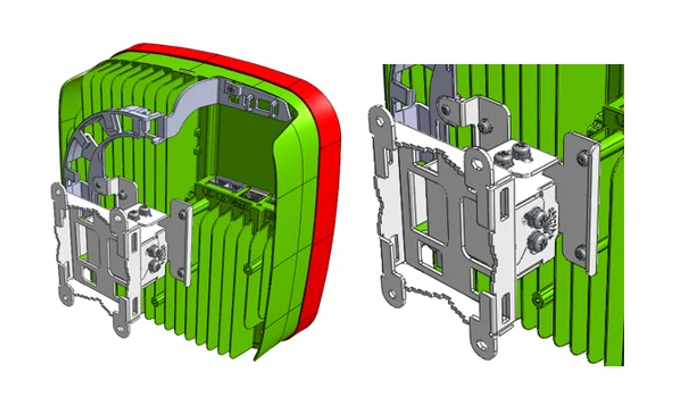
Reliable communication systems require effective thermal management. This case study demonstrates how CFD-driven thermal analysis can support the development of high-performance communication equipment with improved reliability, effeciency, and design confidence.
In the process where renewable energy takes the spotlight, the need and interest in Energy Storage Systems (ESS) to secure electric energy from various sources persist. Achieving stable energy storage requires thorough verification during the ESS design phase, considering the environmental factors of its installation and potential issues arising during the setup. This pursuit of stability becomes paramount for ESS.