Assess airflow patterns, heat transfer characteristics, and component temperatures to ensure thermal reliability under passive cooling conditions.
1. Can Be Evaluated Even Without an Active Cooling Device?

Field Installation Environment
Are you unsure how to analyze equipment that relies solely on natural cooling?
With the continuing trend toward higher performance, increased integration density, and miniaturization of communication and electronic equipment, effective heat dissipation has become a critical design requirement. While conventional cooling methods such as forced-air cooling and liquid cooling have been widely adopted, growing concerns regarding energy consumption, noise generation, maintenance requirements, and system complexity have increased interest in passive cooling solutions.
Natural cooling systems, which operate without fans or pumps, rely on heat conduction and natural convection to dissipate heat. Although environmental conditions differ from those of active cooling systems, CFD-based thermal analysis can accurately predict the thermal performance of passive cooling designs and support design optimization during the development stage.
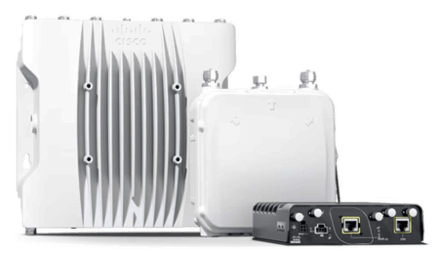
Naturally Cooled Communication Electronics
2. Why Is Natural Convection Analysis Important for Communication Electronics?
As communication electronics become increasingly compact and high-performance, heat generation within limited enclosure spaces continues to rise. Excessive temperatures can reduce communication performance, decrease component reliability, and shorten product lifetime. Therefore, effective thermal management is a critical factor in communication equipment design.
For naturally cooled systems without fans or liquid cooling devices, heat is dissipated only through conduction, natural convection, and thermal radiation. Cooling performance is strongly influenced by factors such as enclosure geometry, heat sink design, component arrangement, and installation conditions. CFD-based natural convection analysis enables engineers to predict airflow patterns and temperature distributions before physical prototypes are built, identify potential hot spots, and verify that all components operate within their allowable temperature limits. As a result, natural convection analysis helps optimize thermal design, reduce development costs, and ensure the long-term reliability and stability of communication electronics.
3. What Should Be Considered in Natural Convection Thermal Analysis?
In natural cooling systems, the primary objective is to maintain component and enclosure temperatures within allowable operating limits without mechanical assistance. Heat generated by electronic components must be efficiently transferred through the enclosure and dissipated into the surrounding environment through natural convection and thermal radiation.
Several key factors should be evaluated during the design process :
- Heat sink geometry, fin thickness, spacing, and orientation
- Thermal conductivity of enclosure and heat-dissipation materials
- Component layout and heat-source distribution
- Natural airflow paths generated by buoyancy effects
- Ambient temperature and installation environment
- Combined effects of conduction, convection, and radiation heat transfer
By performing conjugate heat transfer (CHT) analysis, engineers can quantify the influence of these parameters on temperature distribution and identify the most effective thermal design configuration.
list view