

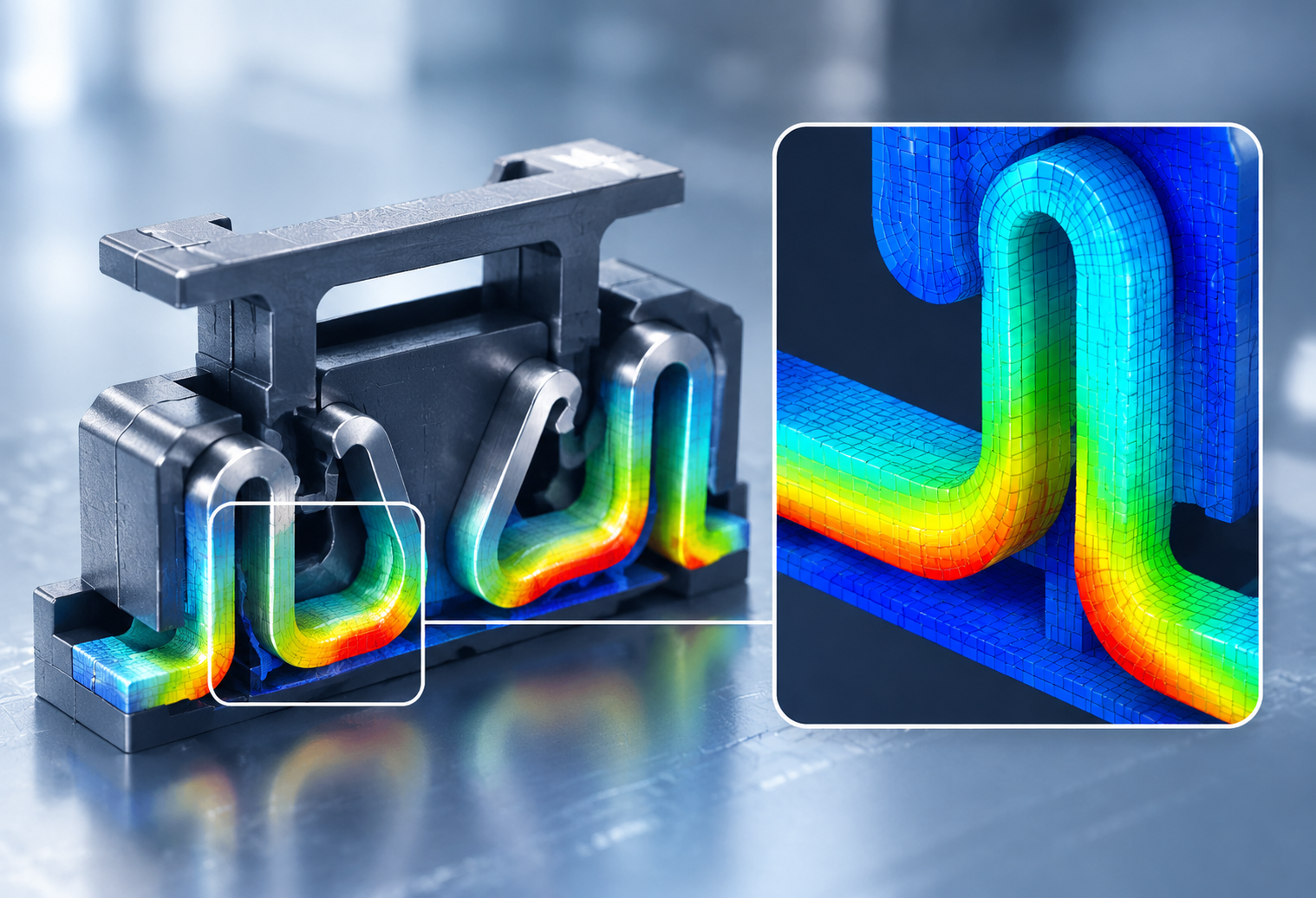
Overview
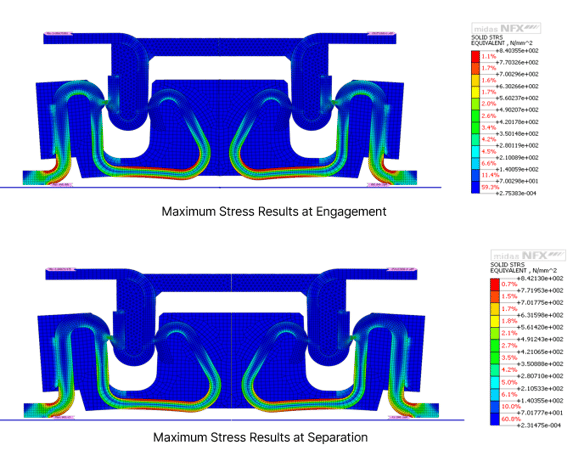
Structures fastened through Snap-fit design use relatively small geometrical features for fixation, and the resulting engagement force and degree of deformation must be reflected in the design. Nonlinear analysis is used to confirm the engagement and separation forces, as well as the extent of plastic deformation, in the Terminal Connector.
1. How to Analyze Fastening Structures?
The topic we will cover today is the "engagement force" of structures.
In our daily lives, we use many fastening components without even realizing it.
From the zipper on trousers to plastic cases, boxes, electronic devices, bicycles, and automobiles, they are used and applied in a wide variety of contexts.
Because relatively small geometrical features are used, highly ductile steel-based materials and plastics are commonly employed, and there are many situations where large deformations occur with repeated use.
It is necessary to understand the appropriate engagement and separation forces and the degree of plastic deformation for a given product based on various geometries and material criteria, and to incorporate this understanding into the design.

2. Why Is Analysis of Fastening Components Necessary?
When discussing fastening components, the first things that come to mind are welding and bolts; however, among the fastening methods used most often without conscious awareness, the most common is the Snap-fit (interference fit) design based on geometric dimensions. The most easily recognizable example in everyday life is the plastic buckle. It operates on a mechanism that, after being slightly deflected and engaged, resists disengagement due to the geometric difference in shape. Beyond this, it is used across a wide range of industries including groove-based fixation inside cases, terminals in electronic devices, hooks, carabiners, and more offering great convenience in use.
Thinking about the circumstances at the time of use and considering the potential problems, the first concern that comes to mind is fracture. There are cases where excessive force or repeated use causes the component to break. This represents a design flaw in which plastic deformation beyond the yield strength occurs under unanticipated loads, and in severe cases, failure occurs after only a small number of cycles. Since disengagement of a fixed part due to fastener failure can cause significant functional problems, it is critically important to account for the expected loads in the design in advance.
3. How Can an Analytical Approach Be Applied to Fastening Structures?
In Snap-fit design using geometry, the most important aspect is verifying the degree of plastic deformation and structural safety as a function of the interference fit level. Because the principle relies on the difference in geometric dimensions to resist loosening after engagement, forced plastic deformation occurs repeatedly, and its magnitude becomes a key variable that determines whether failure occurs as well as the engagement/separation force.
.....
Explore the Full Resource
Get practical insights, proven approaches, and real-world engineering examples