

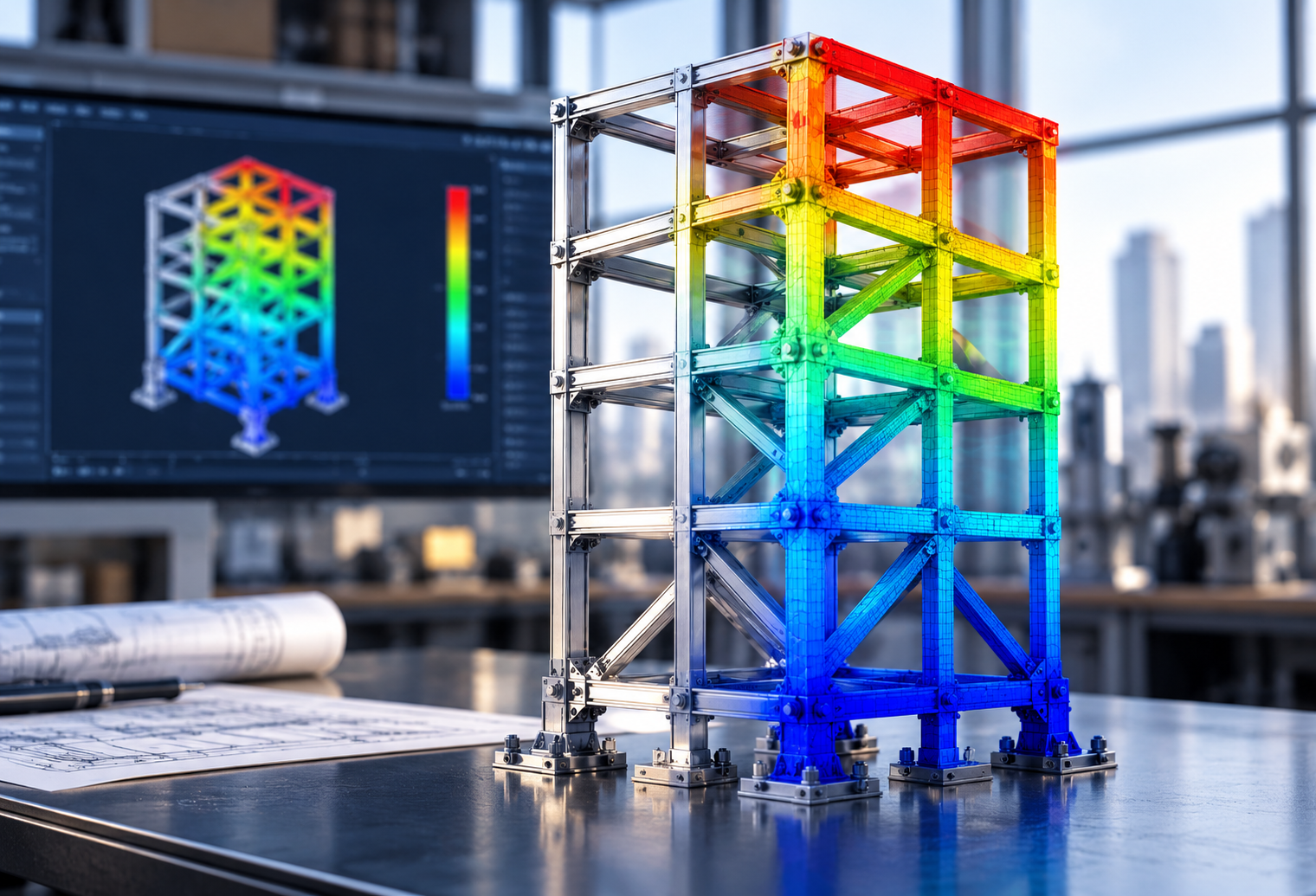
Overview
1. How do you perform spectrum analysis using composite elements?
Today's topic is about 'rational element selection' in analysis.
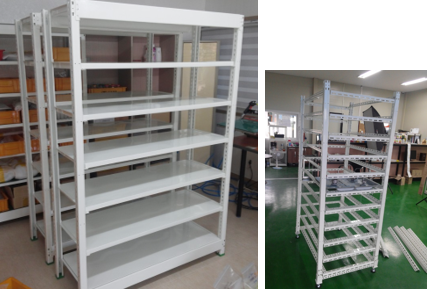
Shelves are used effectively across various industrial sectors and living spaces. Working shelves typically used in manufacturing or warehouses are designed to withstand considerable loads, and can generally be designed to support weights ranging from 100 kg to several hundred kg.
Spectrum seismic analysis is the process of predicting and evaluating how a structure responds when an earthquake occurs. This method plays an important role in analyzing the structural response caused by earthquakes using a seismic spectrum, and in assessing and improving the seismic durability of the structure.
Infrared Temperature Monitoring
2. Why is it necessary to simplify the analysis model of a structure?
The subject of this topic, the shelf, is widely used in warehouses, logistics, manufacturing, production lines, offices, conference rooms, residences, and living spaces depending on its application. The loads on a shelf can vary depending on numerous factors, and the material, structure, size, and installation method of the shelf must all be considered. The type and weight of items placed on a working shelf are also important factors. Therefore, as the number of elements can increase with the size and structure of the shelf, optimizing the size of the analysis model — that is, the computation time — can be highly beneficial.
Seismic analysis refers to the process of analyzing the forces and displacements induced in a structure by an earthquake. Since earthquakes are one of the most powerful natural disasters capable of causing severe damage to structures, it is critically important to predict and evaluate the structural response in order to achieve a safe design for shelves.
It would be a rational analysis approach to select and apply 1D/2D/3D elements differently depending on the objective — such as the problem or behavior of the target product, and the specific locations subject to stress or deformation.

Industrial Application Fields
3. How should a shelf structure be designed?
The subject of this topic, the shelf, is widely used in warehouses, logistics, manufacturing, production lines, offices, conference rooms, residences, and living spaces depending on its application. The loads on a shelf can vary depending on numerous factors, and the material, structure, size, and installation method of the shelf must all be considered. The type and weight of items placed on a working shelf are also important factors. Therefore, as the number of elements can increase with the size and structure of the shelf, optimizing the size of the analysis model — that is, the computation time — can be highly beneficial.
Seismic analysis refers to the process of analyzing the forces and displacements induced in a structure by an earthquake. Since earthquakes are one of the most powerful natural disasters capable of causing severe damage to structures, it is critically important to predict and evaluate the structural response in order to achieve a safe design for shelves.
Furthermore, it would be a rational analysis approach to select and apply 1D/2D/3D elements differently depending on the objective — such as the problem or behavior of the target product, and the specific locations subject to stress or deformation.
Therefore, the objective is to review the structural safety of the shelf by simplifying elements to 1D/2D and incorporating the seismic magnitude.
.....
Explore the Full Resource
Get practical insights, proven approaches, and real-world engineering examples