

Overview
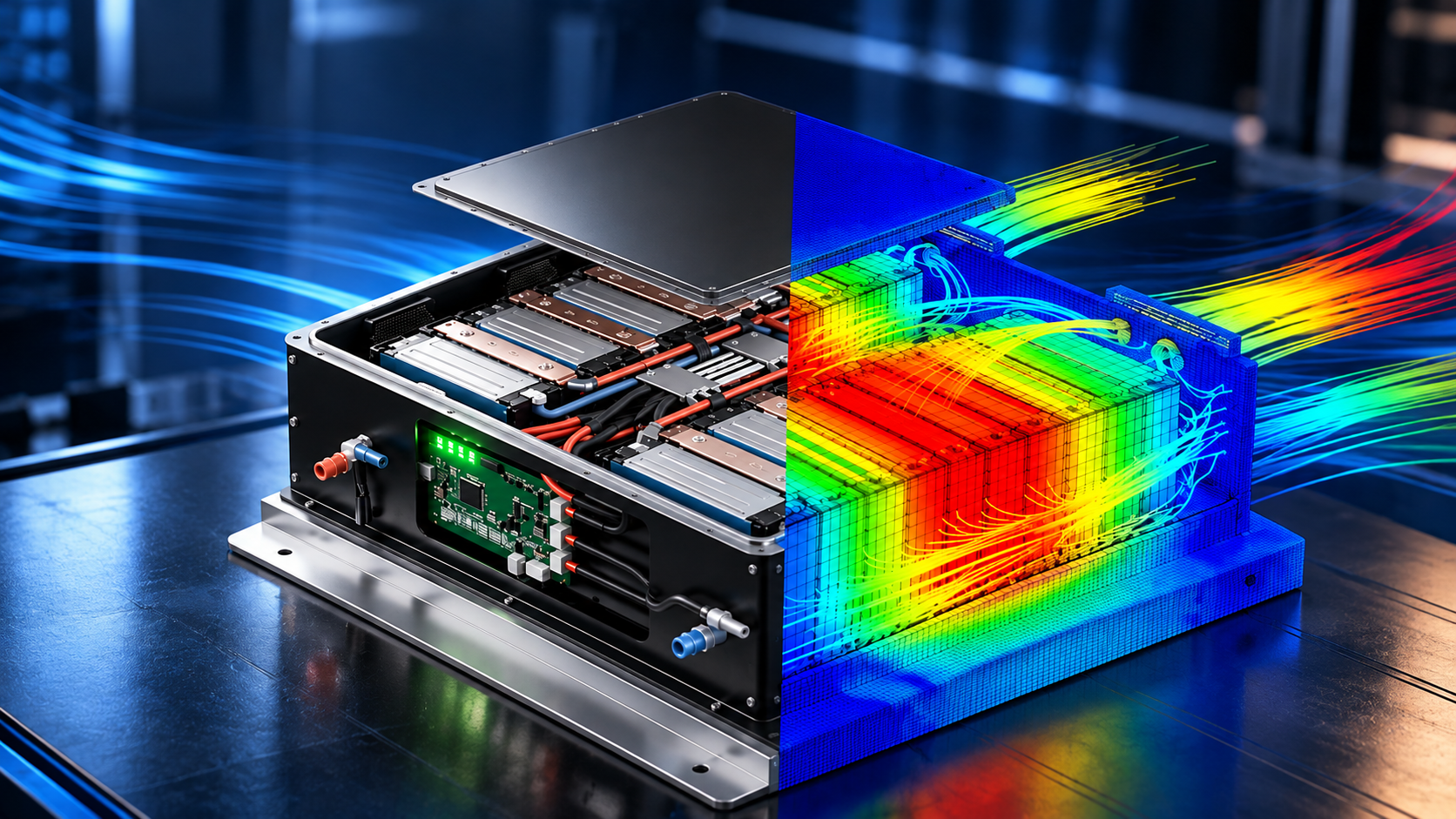
battery systems are continuously exposed to thermal generation during charge-discharge cycles and diverse operating conditions, making thermal safety verification an essential requirement. This technical document demonstrates how to evaluate thermal dissipation performance and verify the thermal integrity of a battery pack utilizing advanced CAE thermal analysis methodologies.
1. How to prevent fire in battery trays?
The topic we will cover today is the “radiation fan effect” of structures.
Heat generation in electronic equipment
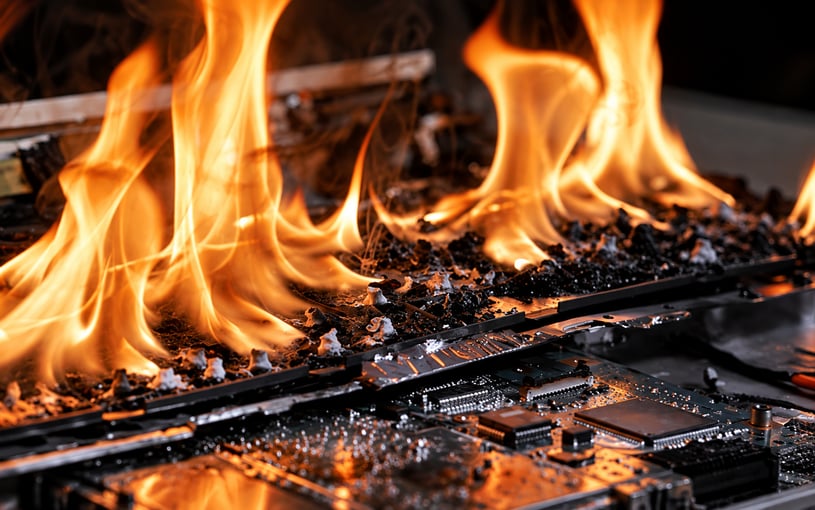
Batteries of various sizes are widely used in modern electronic devices and industrial systems. If heat generated during operation is not effectively dissipated, battery performance may deteriorate, service life may be reduced, and safety risks such as thermal runaway or fire may increase.
Cooling fan for electronic equipment
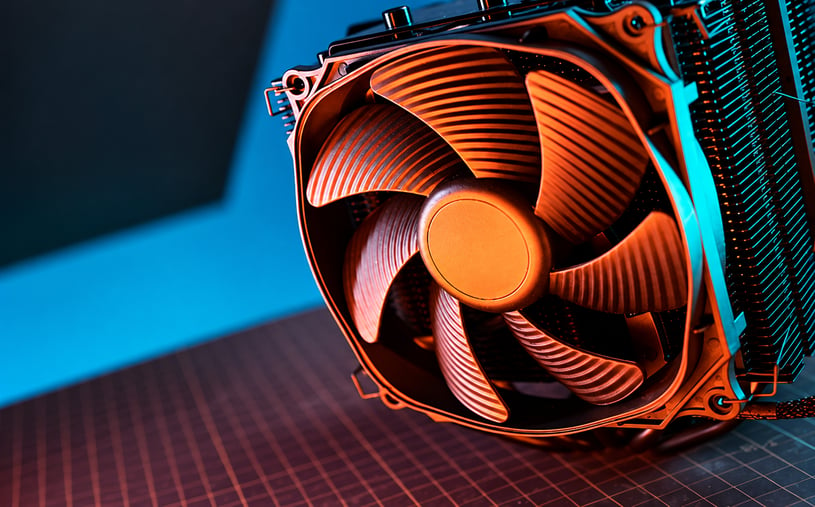
As battery capacity increases, battery systems are often designed with more complex structures, including battery trays, cooling gaps, and heat dissipation fans. In such systems, it is important to evaluate airflow distribution and cooling performance from a CFD analysis perspective during the design stage.
2. Why is fluid analysis necessary in heat sink design
The battery tray structure considered in this example is commonly used in medium- to large-scale electronic equipment that contains multiple batteries. When multiple battery cells are installed, sufficient spacing is required not only for cell arrangement but also for thermal management. In addition, cooling devices such as fans may be applied to promote airflow through the tray and remove heat from the battery cells.
For small or single-cell battery systems, liquid cooling may be effective because the cooling area is relatively limited. However, as the size and scale of the battery system increase, air cooling using heat dissipation fans is often adopted to cool a wider region more efficiently.
Although arranging batteries densely may improve space utilization, it can also restrict airflow and promote heat accumulation. Since internal airflow cannot be directly observed by visual inspection, CFD-based flow analysis is required to evaluate how effectively the cooling design removes heat and maintains safe battery operating temperatures.
3. How do we design for heat sink cooling?
In internal forced-convection cooling systems driven by heat dissipation fans, airflow velocity and flow distribution are key factors affecting cooling performance. Although airflow cannot be directly observed by visual inspection, it continuously moves through the internal space according to fan performance, fan placement, duct geometry, and flow resistance. As a result, some regions may experience high-velocity airflow, while others may become stagnant with little or no airflow.
.....
Explore the Full Resource
Get practical insights, proven approaches, and real-world engineering examples