

Overview
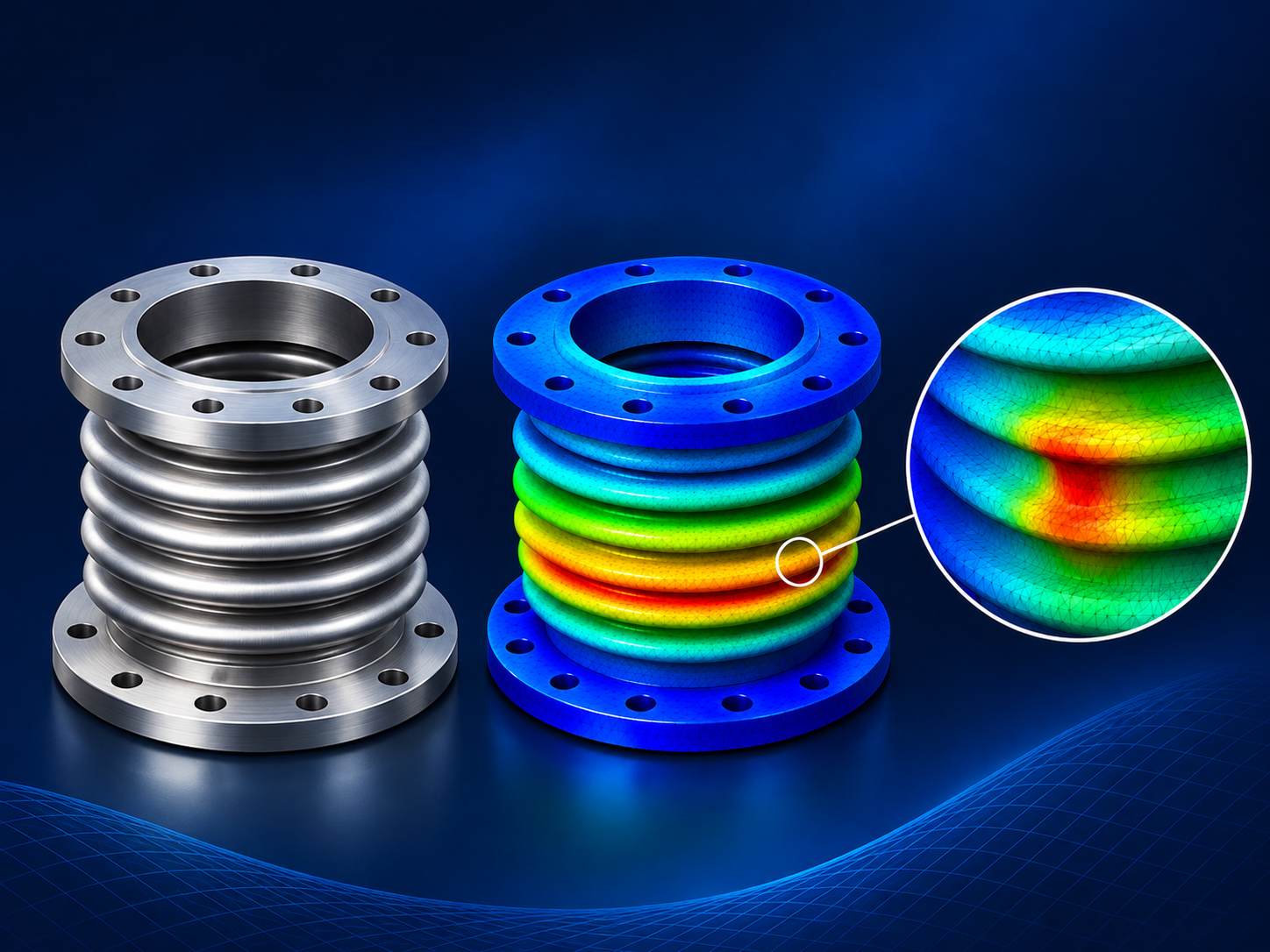
Learn how to perform nonlinear structural analysis of bellows using midas NFX. This case study explores how material, geometric, and contact nonlinearities affect bellows deformation under internal and external vacuum pressure. Discover how finite element analysis (FEA) evaluates stress distribution, plastic deformation, and structural safety under tensile and compressive loading conditions, helping engineers assess bellows performance and reliability.
1. How do you analyze a bellows structure?
The topic we will cover today is "nonlinear analysis" of structures.
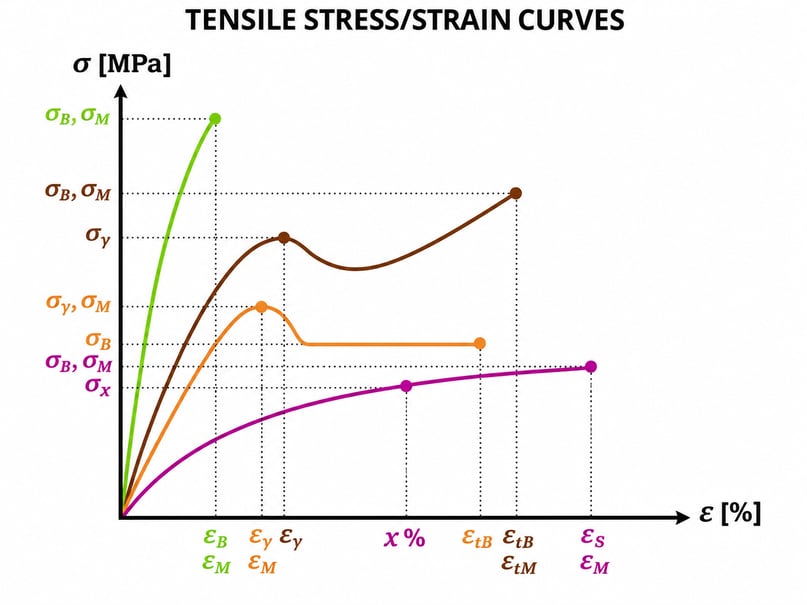
In structural mechanics, nonlinearity refers to situations in which stiffness changes or the direction of forces varies.
Linear analysis is primarily used for the Superposition Theory; however, analyses of nonlinear situations are also performed on occasion.

Bellows structures are used in high-temperature environments to accommodate thermal expansion, and are a representative example of structures that exploit plastic deformation of materials beyond the yield region.
Three types of nonlinearity material, contact, and geometric are applied, and an understanding of the analysis and evaluation methods is required.
2. What is the difference between nonlinear and linear analysis?
The bellows structure, which is the subject of this topic, is often cited as a representative structure exhibiting nonlinearity. The distinction between linear and nonlinear is based on whether or not stiffness changes; in practice, however, this distinction exists only within the context of analysis. Why do we differentiate between the two?
All physical phenomena around us can be viewed as inherently nonlinear; a truly linear state cannot exist. However, tracking every change in stiffness and reproducing it within a virtual environment (computer) requires enormous resources and effort. The most important considerations in design are quickly addressing various variables and ensuring structural safety. In particular, there is a tendency to adopt a more conservative approach for structures associated with greater risk or scale of harm — such as loss of life or property damage.
To address this, physical phenomena including natural disasters have been quantified as loads based on experiments and data, and design standards have been established so that various event scenarios can be evaluated through load combinations. Linear analysis is commonly referred to as stiffness evaluation; it is generally used to predict or combine results via the Superposition Theory, taking advantage of the fact that stiffness does not change. In most designs, a simple and conservative linear approach is taken within the elastic range of the material.
.....
Explore the Full Resource
Get practical insights, proven approaches, and real-world engineering examples