

Overview
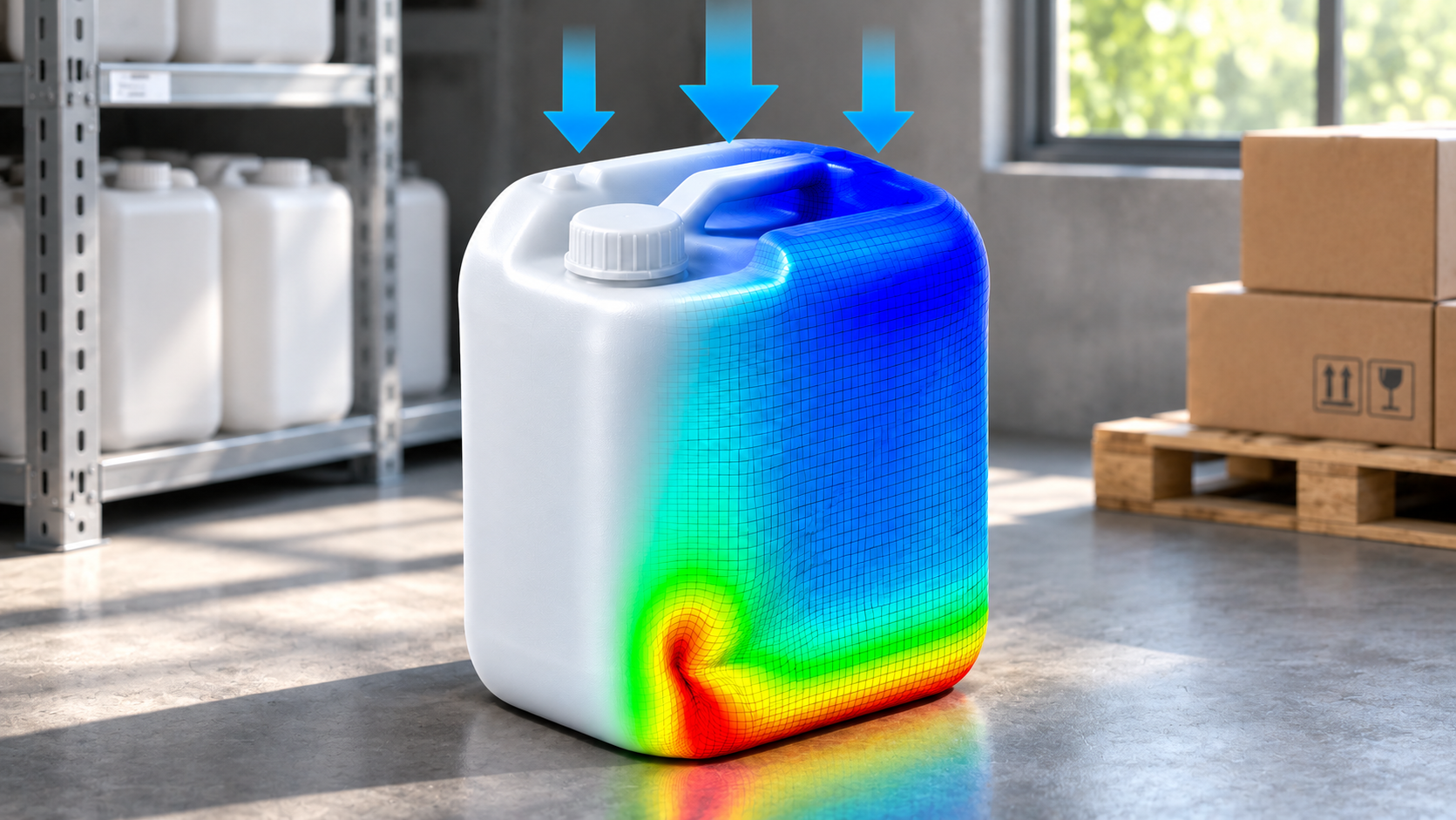
Polyethylene containers are composed of thin-walled structures depending on their processability and application, and it is frequently observed that their load-carrying capacity degrades due to buckling failure when compressive forces are applied. This is an example intended to explore analytical approaches to buckling and to identify the differences between linear and nonlinear methods.
1.Buckling Analysis of Polyethylene Containers
Today's topic is "buckling failure" of structures.
In our daily lives, polyethylene containers are used in a wide variety of plastic products such as cosmetic containers, beverage bottles, food containers, detergent containers, toys, flooring materials, and vinyl films. Due to the nature of their processability and intended use, many of these products are manufactured with thin walls.
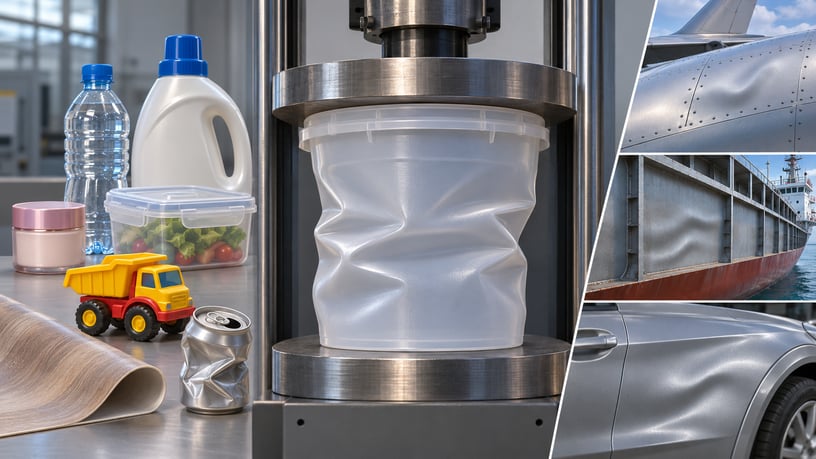
Thin-walled structures are highly vulnerable to compressive forces, and load-carrying capacity degradation due to buckling failure readily occurs.
This is analogous to the crushing of an aluminum can when stepped on in everyday life, and the same phenomenon occurs not only in polyethylene containers but also across various industries including aerospace, shipbuilding, and automotive.
2. Why Is Buckling Failure Dangerous in Thin-Walled Structures?
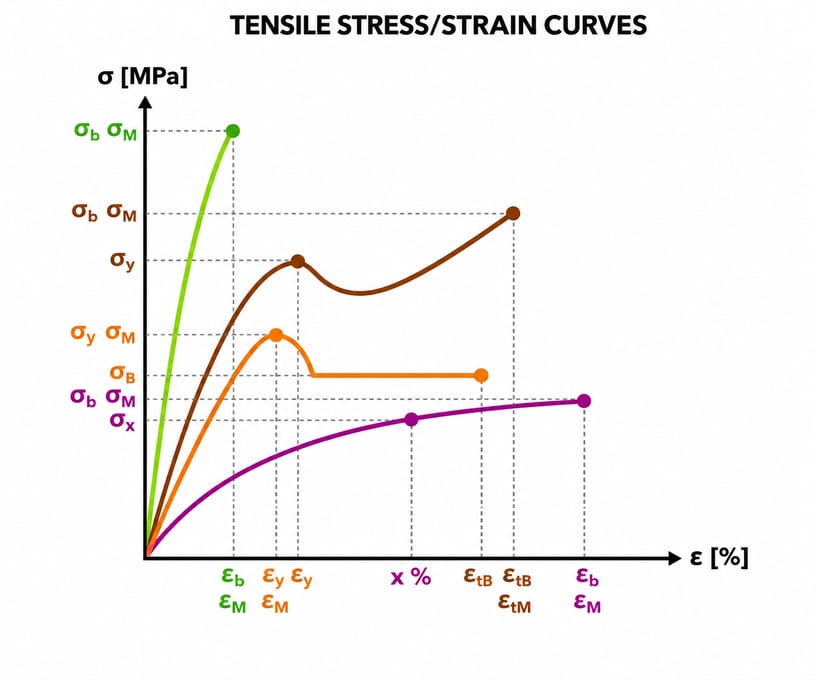
Structural failure can be categorized into yielding, fatigue, buckling, creep, and others. For general structures, robustness is evaluated against yielding criteria to confirm safety, and ductile deformation can be visually observed, allowing for some degree of response. However, in the case of fatigue and buckling failure, damage initiates suddenly at an unexpected moment, making it difficult to respond and potentially leading to very dangerous situations. As an everyday analogy for buckling, it is similar to the moment when you are slowly stepping on an aluminum can after finishing a cola and it suddenly collapses, causing an abrupt drop in load-carrying capacity.
General industrial structures have sufficient thickness, so the risk of buckling failure is minimal. However, in industries such as aerospace, shipbuilding, and automotive — where weight reduction is critical alongside structural stiffness, as with polyethylene containers and aluminum cans — very thin sheet materials are used, and these structures are constantly exposed to the risk of buckling failure. In addition to structural safety against general tensile and bending deformation, buckling safety under compression must also be evaluated as a mandatory check.
3. How can buckling analysis of a polyethylene container be performed?
Buckling failure is approached through either physical testing or CAE analysis. When classified in detail, analytical
approaches can be divided into Linear Static Analysis and Non-linear Static Analysis.
In linear static analysis, the degree of deformation under external loads is examined and compared against the natural frequencies of each modal order of the structure, allowing an approximate buckling load scale value to be identified.
.....
Explore the Full Resource
Get practical insights, proven approaches, and real-world engineering examples