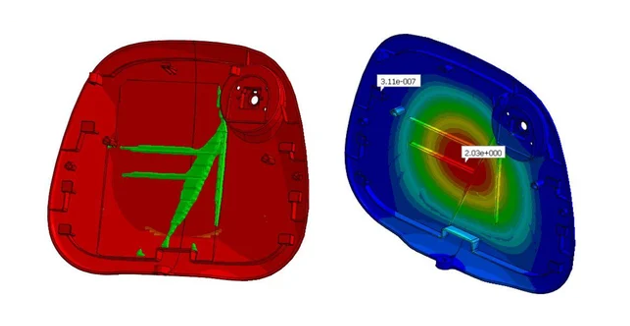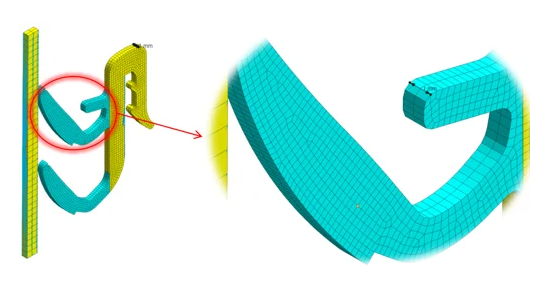
All structures on the ground are constantly exposed to seismic natural disasters, and seismic safety verification is an essential requirement. In this example, we will explore how to verify base station BBU communication server rack equipment using a analytical verification method called response spectrum analysis.
1. Safety Review of Support Structures for Heavy Equipment
Today's topic is "deflection and safety" of rack structures.
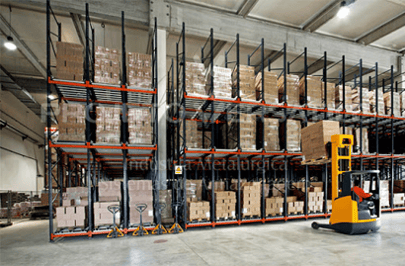
Example of rack structure
It is common to see equipment installed on multiple floors for process efficiency or space optimization.
"My equipment weighs over 5 tons — is that okay??“ "It... looks like it's bent — am I imagining things??"
"If an earthquake hits, won't it just topple over??"
Users develop significant anxiety about safety regarding serviceability issues such as structural deflection and the uncontrollable domain of seismic events. Therefore, it is important for us to numerically verify the degree of safety a structure actually possesses.
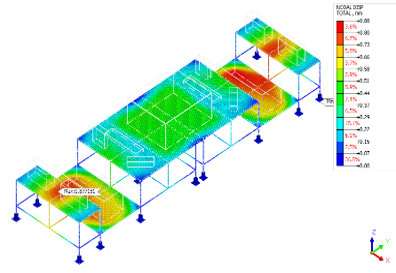
Example of deflection analysis results
2. Why Is Deflection Analysis Necessary for Structures?
The rack structure composed of steel frames, which is the topic of this discussion, is widely used for loading equipment and goods. It is common to see multi-story configurations around us, designed to store equipment and goods for process efficiency or space optimization.
Considering that objects weighing over one ton are placed on them, the rack structure itself can bend or, in severe cases, collapse, posing serious risks. Even if structural safety is ensured, a deflected rack structure can cause significant anxiety for users, and in the case of equipment requiring precision, functional problems may arise. Furthermore, in the unpredictable and uncontrollable event of an earthquake, there is a risk that the rack structure itself may bend and collapse.
3. How Can the Weight Load of Heavy Equipment Be Applied and Evaluated?
In general, the weight of structures loaded on top of rack structures is converted into a vertical load by applying mass and gravitational acceleration (1g) according to installation specifications and incorporated into the analysis.
The upper load can be modeled as a three-dimensional solid object in numerical analysis, with mass calculated by multiplying the material's mass density by the volume, or mass can be applied directly at the center of gravity (C.O.G.). Based on the gravitational acceleration load applied in the program, loads can be automatically applied based on positional information at each location.
Since seismic loads cannot be directly observed or evaluated through specific measurement data, loads are defined based on seismic wave data measured over several decades by regional meteorological agencies. Seismic loads by region in Korea are presented in the domestic architectural structural design standard "KDS 41 17 00 : 2019", and structural analysis and safety reviews for seismic loads can be performed based on this standard.
Let us now explore together how the structural safety of a rack structure loaded with heavy equipment can be analytically verified. The example involves a two-story rack structure, and this is a review document examining the degree of deflection and seismic structural safety of the structure with respect to the weight information
list view